• Argentina and Chile Chapter: El Ejercicio en los trastornos de la conducta alimentaria: ¿síntoma o aliado terapéutico?

    Virtual

    Esta masterclass aborda el rol del ejercicio en los trastornos de la conducta alimentaria (TCA) desde una perspectiva clínica y basada en evidencia, analizando su doble dimensión como conducta saludable y potencial síntoma psicopatológico.Se revisarán los criterios que permiten diferenciar el ejercicio saludable del ejercicio...

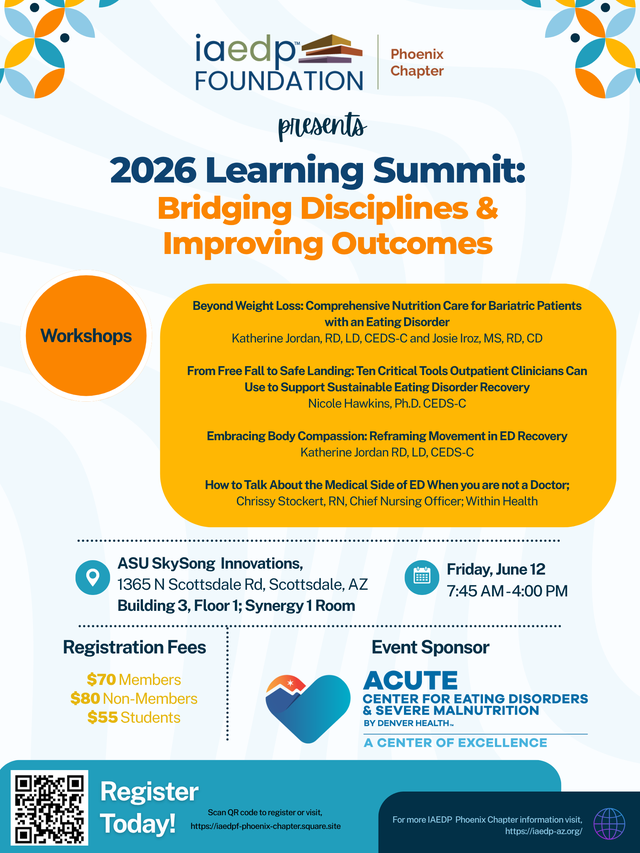
  • Phoenix Chapter: Learning Summit

    ASU SkySong Innovations 1365 N Scottsdale Rd Scottsdale, Arizona 85257 United States

    Eating disorders are deadly diseases that impact psychosocial functioning and quality of life. Unfortunately, eating disorders are prevalent in many seeking treatment to lose weight. One study indicated that as many as 49 percent of patients seeking bariatric surgery have binge eating disorder. Binge eating...

  • Jornada 2026 del Capítulo Internacional iaedp El Salvador Trastornos de la conducta alimentaria

     Jornada 2026 del Capítulo Internacional iaedpâ„¢ El Salvador Trastornos de la conducta alimentaria: señales que no vemos a tiempo When: Saturday, June 20, 20269:00 am - 12:00 pm CENTRALWhere: Virtual - ZoomEl SalvadorContact:Kennia Vallejo de Salazarksalazarnutricion@gmail.com  Actividad académica virtual dirigida a profesionales de salud interesados en mejorar...

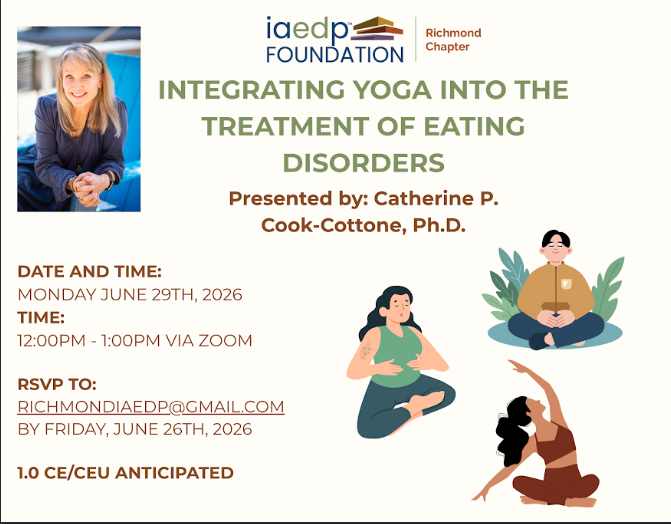
  • Richmond Chapter: Integrating Yoga into the Treatment of Eating Disorders

    This workshop explores the integration of trauma-informed yoga practices into eating disorder prevention and treatment through the lens of embodiment, self-regulation, and nervous system awareness. Participants will examine the physiological and psychological mechanisms through which breath regulation, mindful movement, interoceptive awareness, and grounding practices may...

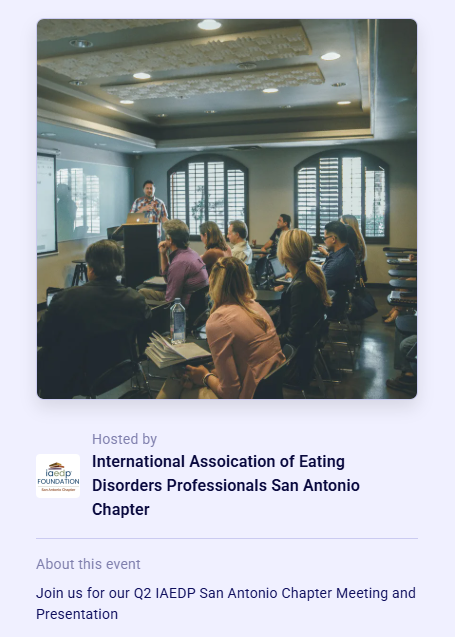
  • San Antonio Chapter: Ethical Considerations in Eating Disorder Treatment

    Eating Recovery Center 250 E Basse Rd #206 San Antonio, Texas 78209 United States

    This presentation explores key ethical considerations in eating disorder treatment, including patient autonomy, beneficence, nonmaleficence, and justice in clinical care. Attendees will examine ethical challenges related to virtual treatment settings, higher levels of care, lifesaving interventions, and informed consent when cognitive impairment is present. Through...

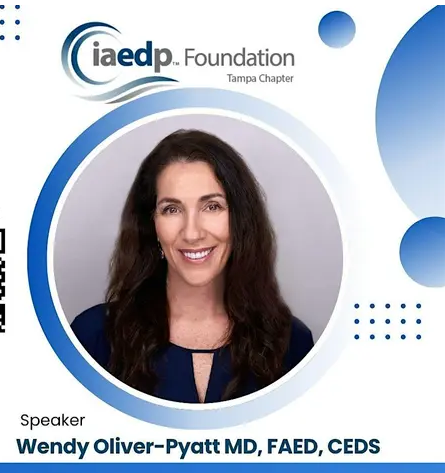
  • Tampa Chapter: Eating Disorders and Midlife

    Johns Hopkins All Children's Hospital (EDT) 600 5th St S St. Petersburg, Florida 33701 United States

    While society’s obsession with maintaining youth masks the reality of midlife eating disorders, mature adults navigate a silent crisis created by the intersection of aging, diet culture, and hormonal transitions related to menopause. These midlife transitions further complicate an environment where relevance and social status...

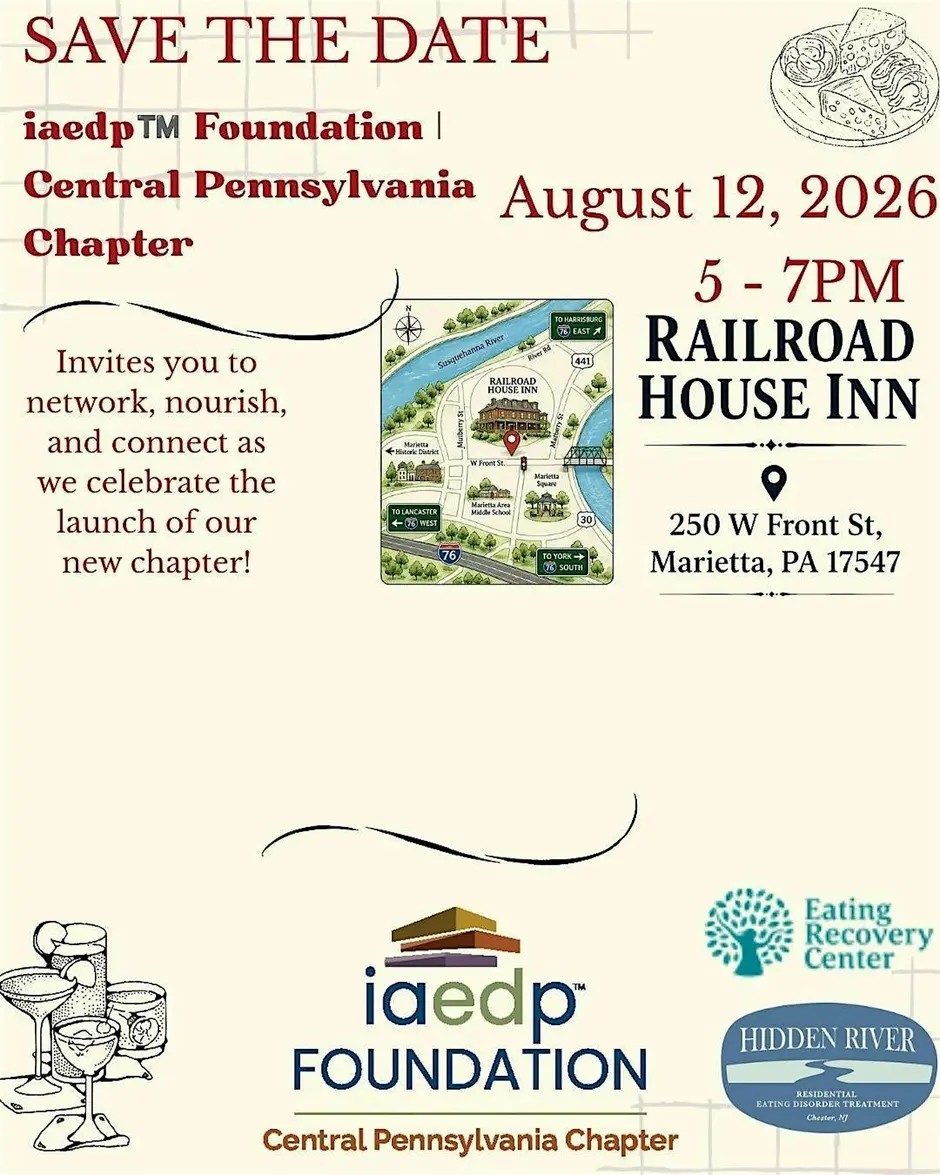
  • Central Pennsylvania Chapter: Nourish, Network, and Connect

    Railroad House Inn 250 W Front Street Marietta, Pennsylvania 17547 United States

    The iaedpâ„¢ Foundation Central Pennsylvania Chapter invites you to network, nourish, and connect as we celebrate the launch of our new chapter! Get ready to connect, share ideas, and grow with an incredible community of professionals. Hosted by Hidden River, The Renfrew Center and Eating...

  • Scottsdale AZ: Therapeutic arts for self-care: Exploring therapeutic arts practices

    Mini Social Event Venue 7116 E 5th Ave Scottsdale, Arizona  85251

    Participants will explore the conceptual and practical distinction between therapeutic arts and art therapy, two terms that are frequently conflated but differ significantly in scope, training requirements and clinical application. This distinction is essential for psychological practice: clinicians must understand the boundaries of their own...

  • Orlando FL: Reimagining Eating Disorder Care for Black Women

    Whole Life Church 2800 N. Orange Ave Orlando, Florida 32804 United States

    Eating disorders in Black women are frequently underrecognized, underdiagnosed, and undertreated due to persistent stereotypes, systemic inequities, and culturally incongruent understandings of illness. Clinicians who rely solely on traditional presentations may inadvertently overlook symptoms, delay intervention, or contribute to disparities in care. This presentation encourages...