The iaedp™ Foundation does not endorse any products or services. Users are encouraged to conduct their own research and comparison.
Find more information about becoming a partner here. Find information, data and specs for the Marketplace here.
IMPACT PARTNERS
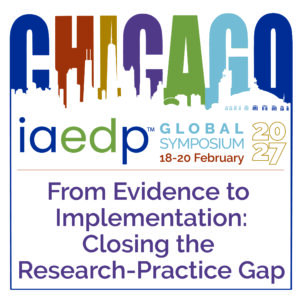
18-20 February 2027 | Marriott Marquis Chicago
This year’s program is built around a theme that reflects where the field needs to go: “From Evidence to Implementation: Closing the Research-Practice Gap.” We’re looking for presentations, panels, and educational sessions that bring research and clinical practice closer together, created by the kind of professionals who know firsthand what that gap looks like.Whether your presentation is geared toward early-career clinicians building their foundational toolkit, a mid-career practitioner refining complex case approaches, or an experienced professional working at the leading edge of research, there is a place for your work on this stage.
Become a Certified Eating Disorder Specialist (CEDS)
As a licensed eating disorders professional, you are eligible to become a Certified Eating Disorder Specialist (CEDS) as well as a Certified Eating Disorder Specialist Consultant (CEDS-C).
Be part of a global community dedicated to advancing eating disorders treatment with unparalleled resources, networking opportunities, and professional development.
As a licensed eating disorders professional, you are eligible to become a Certified Eating Disorder Specialist (CEDS) as well as a Certified Eating Disorder Specialist Consultant (CEDS-C).
The Academy for Eating Disorders (AED) Publications page offers a wide range of downloadable resources, including fact sheets, reports, and guidelines to support education, research, and best practices in the field of eating disorders.
AEDA (the Arab Eating Disorders Association) is a regional, multidisciplinary initiative dedicated to advancing eating disorder awareness, prevention, and evidence-based care across the Middle East and North Africa. Open to clinicians, researchers, individuals experiencing eating disorders, their families, and advocates, AEDA brings together a growing community committed to improving access to culturally informed support. Through training programs, educational resources, community initiatives, and professional networking, AEDA aims to strengthen the regional ecosystem of care and foster collaboration across disciplines and countries.
Consortium for Research in Eating Disorders (CoRe-ED)
CoRe-ED is a global eating disorder research-focused charity and community, which anyone around the world is welcome to register free of charge. CoRe-ED provides a wide range of cross-cultural educational resources for clinicians, researchers, people experiencing eating disorders and their loved ones, advocates and industry representatives.
F.E.A.S.T. (Families Empowered and Supporting Treatment of Eating Disorders) provides comprehensive educational content for families, offering guidance, practical tools, and peer support to help loved ones navigate the challenges of eating disorder treatment and recovery.
The National Eating Disorders Association (NEDA) offers a confidential screening tool for ages 13 and up that helps identify whether support may be needed and connects individuals with appropriate resources and treatment options.
SoulPaws Recovery Project unleashes the healing power of the human–animal connection to support individuals struggling with eating disorders. Grounded in the research of Dr. Bruce Pery, MD, PhD, their free Healing Circles bring therapy animals, peers, and trained clinicians together in guided sessions that help participants: • Calm the nervous system and restore regulation • Connect through authentic, non-judgmental relationships • Heal by accessing higher brain functions needed for reflection and growth